What Sources Does AI Cite? A Case Study of 1,334 Citations for SEO Agencies
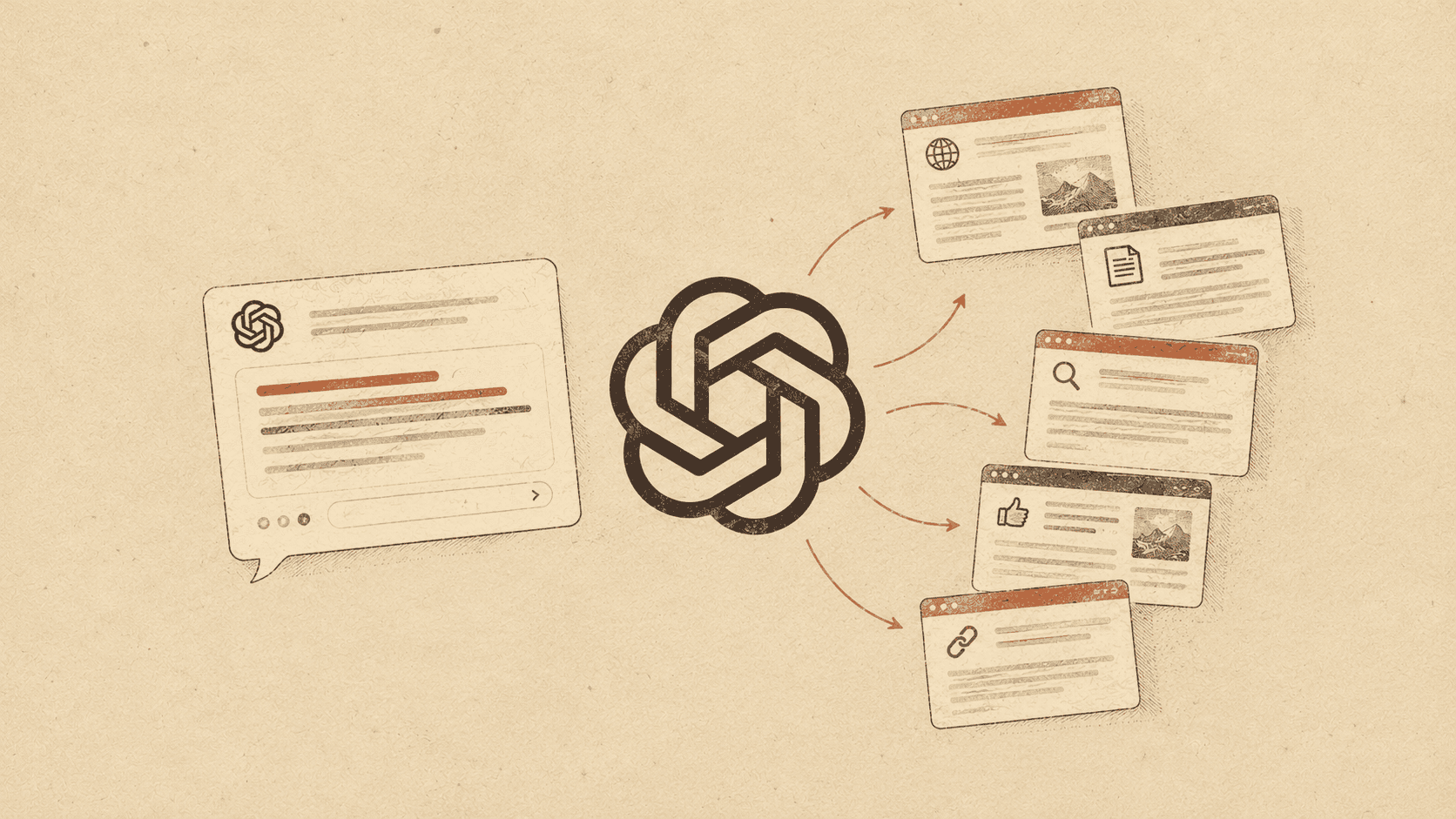
As AI assistants get better, more people look for recommendations in chatbots instead of Google. They ask ChatGPT, Gemini or Perplexity which product to buy, which service to use or which company to trust. For businesses, that is a new situation: whether they get recommended depends on the AI model and the pages it bases its answer on. So we set out to measure which pages AI cites most often, using SEO agencies as an example. In Heuriso, we asked 20 questions that people looking for an agency ask, in three models: ChatGPT, Gemini and Perplexity. We repeated each question three times, which gave us 180 answers and 1,334 citations. The headline finding: more than three quarters of cited sources were the websites of SEO agencies themselves, while agency rankings and directories made up only 7%.
How we ran the study
We ran the test in Heuriso, which collects answers directly from each chatbot’s interface, meaning the same version an ordinary user sees. That matters, because this is the answer, and these are the sources, your potential customer will see.
The study covers one market: we asked questions in Polish about SEO agencies in Poland. The mix of sources can look different in other languages and industries, so treat the numbers as one well-measured data point, not a universal rule.
AI answers aren’t fixed. The same question asked today and tomorrow can produce a different list of sources, because the model searches the web again every time. A single measurement would only be a snapshot. That’s why we repeated the whole measurement three times, on different days, for a total of 180 answers and 1,334 citations. Pages that appear across measurements are consistent sources, not random hits.
From every answer we saved all the pages the model cited. The analysis uses three metrics:
- Citations: how many times a domain appeared in the sources of all answers.
- Citation share (SoV, Share of Voice): what part of all 1,334 citations a domain accounts for.
- % of queries: in how many of the 20 queries the domain appeared at least once. It shows how broadly AI uses a page, not just how often.
We also assigned each domain a source type: SEO agency or specialist website, agency ranking or directory, technology company, marketing media and blogs, freelance marketplace, news site, review site, forum or other. That shows not only which pages AI cites, but which kinds of content it trusts most.
The most cited websites: top 20
| # | Source | Source type | Citations | SoV | % of queries |
|---|---|---|---|---|---|
| 1 | widoczni.com | SEO agency | 97 | 7.3% | 85% |
| 2 | delante.pl | SEO agency | 72 | 5.4% | 70% |
| 3 | digitay.pl | SEO agency | 25 | 1.9% | 45% |
| 4 | upmore.pl | SEO agency | 24 | 1.8% | 30% |
| 5 | eactive.pl | SEO agency | 22 | 1.6% | 50% |
| 6 | double-digital.pl | SEO agency | 22 | 1.6% | 40% |
| 7 | sembility.com | SEO agency | 21 | 1.6% | 55% |
| 8 | justidea.agency | SEO agency | 19 | 1.4% | 35% |
| 9 | verseo.pl | SEO agency | 18 | 1.3% | 40% |
| 10 | agencjawroclawska.pl | SEO agency | 17 | 1.3% | 40% |
| 11 | plerdy.com | Technology company | 16 | 1.2% | 45% |
| 12 | coderspilot.com | Technology company | 15 | 1.1% | 40% |
| 13 | non.agency | SEO agency | 15 | 1.1% | 25% |
| 14 | agencies.semrush.com | Agency directory | 15 | 1.1% | 35% |
| 15 | westom.pl | SEO agency | 14 | 1.0% | 30% |
| 16 | clutch.co | Agency directory | 14 | 1.0% | 40% |
| 17 | ministerstworeklamy.pl | SEO agency | 14 | 1.0% | 35% |
| 18 | sayseo.pl | SEO agency | 13 | 1.0% | 25% |
| 19 | propseo.pl | SEO agency | 13 | 1.0% | 30% |
| 20 | ks.pl | SEO agency | 12 | 0.9% | 40% |
SoV: the domain’s share of all 1,334 citations. % of queries: in how many of the 20 queries the domain appeared at least once.
The ranking splits clearly in two. At the top are two domains that AI cites far more often than all the others: widoczni.com appeared in the sources of 17 of the 20 queries, and delante.pl in 14. Together they account for 12.7% of all citations, almost as much as the next ten domains combined. From third place down, the differences are small: each of the remaining pages has between 12 and 25 citations.
The second finding is in the “Source type” column: 16 of the 20 most cited websites belong to SEO agencies. The top 20 includes only two agency directories (the Semrush agency directory and Clutch) and two technology companies (Plerdy and Coderspilot) that publish SEO content on their blogs. When a customer asks AI for an SEO agency, the model builds its answer mainly on what agencies write on their own websites.
It’s also worth comparing the last two columns. Some pages have fewer citations but appear across many different queries. sembility.com has 21 citations and appeared in 55% of queries, more than upmore.pl with 24 citations and 30% of queries. That can mean AI treats such a page as a versatile source, useful for many questions rather than one topic.
What types of websites AI cites
The ranking shows individual domains, but the more interesting question is what kind of pages AI picks. After assigning each of the 357 domains a type, the picture is clear:
| Source type | Citations | SoV | Domains |
|---|---|---|---|
| SEO agency and specialist websites | 1,016 | 76.2% | 257 |
| Agency rankings and directories | 97 | 7.3% | 22 |
| Technology companies | 65 | 4.9% | 15 |
| Marketing media and blogs | 46 | 3.4% | 19 |
| Freelance marketplaces | 45 | 3.4% | 13 |
| News sites | 39 | 2.9% | 19 |
| Review sites | 8 | 0.6% | 3 |
| Industry bodies | 6 | 0.4% | 1 |
| Forums and social media | 3 | 0.2% | 2 |
| Other | 9 | 0.7% | 6 |
| Total | 1,334 | 100% | 357 |
Agency websites: three quarters of all citations
The vast majority of citations led to the websites of SEO agencies and specialists that publish content answering customer questions: 257 different domains, from large agencies to one-person businesses. When someone asks AI how much SEO costs or how to choose an agency, the model reaches first for articles in which agencies answer those questions themselves.
The takeaway for the industry is simple: in AI, the visible agency is the one that publishes content answering customer questions. Being listed in rankings or having a strong brand isn’t enough if your website lacks specific answers.
Rankings and directories: only 7%
Agency roundups such as the Semrush agency directory (agencies.semrush.com), Clutch and local agency rankings account for 7.3% of citations in total.
Technology companies, media and freelance marketplaces
Next come websites that aren’t agencies but write about SEO:
- technology companies (4.9%), such as Plerdy or Coderspilot, which run extensive marketing blogs,
- marketing media and blogs (3.4%),
- freelance marketplaces (3.4%), which collect offers and quotes for SEO services.
Reviews, forums and social media barely register
Review sites (such as Trustpilot) account for just 0.6% of citations, and forums and social media for 0.2%. Reddit appeared in the sources only once out of 1,334 citations. For SEO agencies in this market, AI barely relies on user opinions and leans on expert content instead.
Takeaways for SEO agencies
The data adds up to a few practical tips for agencies and SEO freelancers who want AI to recommend them.
1. Answer the questions customers ask AI on your own website
Three quarters of citations led to agency websites. AI looks for specific answers: how much SEO costs, how long it takes, how to choose an agency, how an agency differs from a freelancer. If your website doesn’t answer these questions, the model will turn to a competitor’s site that does. Instead of yet another general article about SEO, create content that directly answers the questions people ask when choosing an agency.
2. You don’t have to be the market leader to get cited
Two agencies collected 12.7% of citations between them, but 357 different domains appeared in the answers, and more than a third of them only once. AI doesn’t limit itself to the biggest players. A small agency with a well-written, specific article has a real chance of becoming a source, even without a big budget or a well-known brand.
3. Aim at many questions, not one
Some pages were cited less often but across many different queries. sembility.com appeared in 55% of queries, more often than pages with more citations. It pays to have content that answers a range of customer questions, not a single article on one narrow topic.
4. Directories are worth being in, but they’re not enough
Agency rankings and directories account for only 7.3% of citations. Two of them, the Semrush agency directory and Clutch, made the top 20 though, which shows that AI does look at agency listings. A profile there is a good addition, but it won’t replace content on your own website.
5. In this industry, reviews and forums play a minor role
Review sites, forums and social media together account for less than 1% of citations. Customer reviews still matter to customers, but when it comes to what AI cites for questions about SEO agencies, expert content is what counts.
6. Measure instead of guessing
Each model used a different set of pages: ChatGPT cited 183 different domains, Perplexity 146 and Gemini 105. Answers also change over time. The fact that your page appeared once in ChatGPT doesn’t mean it will appear tomorrow, or in Gemini. The only way to know how AI sees your agency, and who it sends your potential clients to, is regular measurement. That’s what Heuriso is for: it shows whether AI recommends your brand, which pages it cites in your industry and how that changes over time.
FAQ
What sources does AI cite when I ask for an SEO agency?
In our study, 76% of citations led to the websites of SEO agencies and specialists themselves. The most cited were widoczni.com and delante.pl, which appeared in 17 and 14 of the 20 queries respectively. Agency rankings and directories made up 7% of citations.
How does ChatGPT decide which SEO agency to recommend?
ChatGPT, Gemini and Perplexity search the web before answering and rely on the pages they find. For SEO agencies, those are mainly the agencies’ own websites, and to a lesser extent directories, industry media and freelance marketplaces.
Do agency rankings affect what AI cites?
Only a little. Agency rankings and directories accounted for 7.3% of citations. Two of them, the Semrush agency directory and Clutch, still made the top 20 most cited websites.
Do ChatGPT, Gemini and Perplexity cite the same websites?
No. Each model used a different set of sources: ChatGPT cited 183 different domains, Perplexity 146 and Gemini 105. Being a source for one model doesn’t mean being a source for the others.
How do I get AI to cite my agency’s website?
Our data shows that AI prefers pages that answer specific customer questions, for example about prices, how long results take or how to choose an agency. Publish content like that, keep your profiles in agency directories up to date and check regularly how AI sees your brand.
Want to know whether AI recommends your company? Heuriso measures it daily across five engines.
Try it for 7 days