How to Rank in ChatGPT: Getting Your Business Recommended by AI
Does ChatGPT recommend your brand? Learn how to choose prompts, track your visibility in ChatGPT and other AI assistants, and use cited sources to get recommended.

As large language models (LLMs) grow in popularity, more and more customers use ChatGPT, Gemini or Perplexity to research products. They ask about possible solutions, compare offers and look for recommendations. A conversation with AI can accompany them at every stage of the buying journey, before they ever visit a company’s website.
For a brand, that means you need to know which questions you appear for, how you’re described and which sources those answers cite.
Ranking in ChatGPT means the work that raises the chance of your company being included in AI answers: measuring your visibility, improving your content and building your brand’s presence in the sources that matter. It is part of the broader field of GEO, or generative engine optimization. Unlike Google, ChatGPT doesn’t have a ranked list of ten blue links, so “ranking” here means being mentioned, recommended and described accurately for the questions your customers ask.
AI at every stage of the buying journey
At first, a customer describes a need and learns about the available options. Then they compare features, use cases and reviews, and before buying they look for a specific product or provider. This use of AI for product research and finding offers is also described in Adobe’s analysis of AI traffic to US retail sites.
It’s worth looking at visibility across the whole buying journey. When someone is exploring a problem, a citation of your company’s guide can matter; when they compare offers, being included in a roundup; and at the decision stage, a recommendation of your brand. In Heuriso we check each of these situations with prompts that reflect specific customer needs.
How to check whether ChatGPT recommends your brand
You can start by hand: type your potential customers’ questions into the tool and check whether your brand appears. Pay attention to the context of the mention, the order of the companies, the competitors and the cited sources. Save the prompts, answers and dates, and run each repeat check in a new conversation, with similar language, location and search settings.
The same prompt can give a different result every time. Your brand may appear in one answer, disappear in the next or move to a different place among the recommendations. That’s why you need to repeat the questions and judge how consistently your company appears.
With more questions, you can use Heuriso, which regularly collects answers from ChatGPT, Gemini, Perplexity, Google AI Overviews and Microsoft Copilot. We analyze:
- Brand presence: how often your brand is mentioned for each prompt.
- Presentation: position, the context of the recommendation, and any praise, caveats or warnings against it.
- Competitors: the companies mentioned and your share of mentions, or Share of Voice.
- Sources: cited domains and URLs, source types and whether your brand appears on the pages we can read.
Whether citations are available depends on the engine and the specific answer. It’s worth checking any automated rating of a mention in its original context.
You can compare results, including Visibility Score, over time and check them against the saved answers. Monitoring covers the prompts you choose and the samples collected. We describe the details in How to measure your brand’s visibility in AI.
How to choose prompts to track your AI visibility
Prompts should reflect your customers’ real questions. Start from sales conversations, support requests and the criteria people use to choose products. Include the use case, budget, location or requirements that shape the decision.
For a coffee machine brand, you could check three stages:
- Recognizing the need: “What kind of coffee machine works at home if we mostly drink milk-based coffee?”
- Comparing: “Compare automatic espresso machines under $800 for milk drinks and easy cleaning.”
- Deciding: “Which espresso machines under $800 do you recommend for two people who drink cappuccino every day?”
For services, you’d similarly include the scope of work, the client’s industry or the experience required of the provider. That way the result relates to needs your offer actually serves.
In prompts that measure organic visibility, don’t mention your own brand. Check whether AI names it on its own. Analyze questions about your company by name separately, as a check of what AI says about a brand the customer already knows.
Group prompts by product category, need and funnel stage. Keep the set comparable across measurements so you can see in which areas your company’s presence changes.
Check the cited sources, their type and whether your brand is there
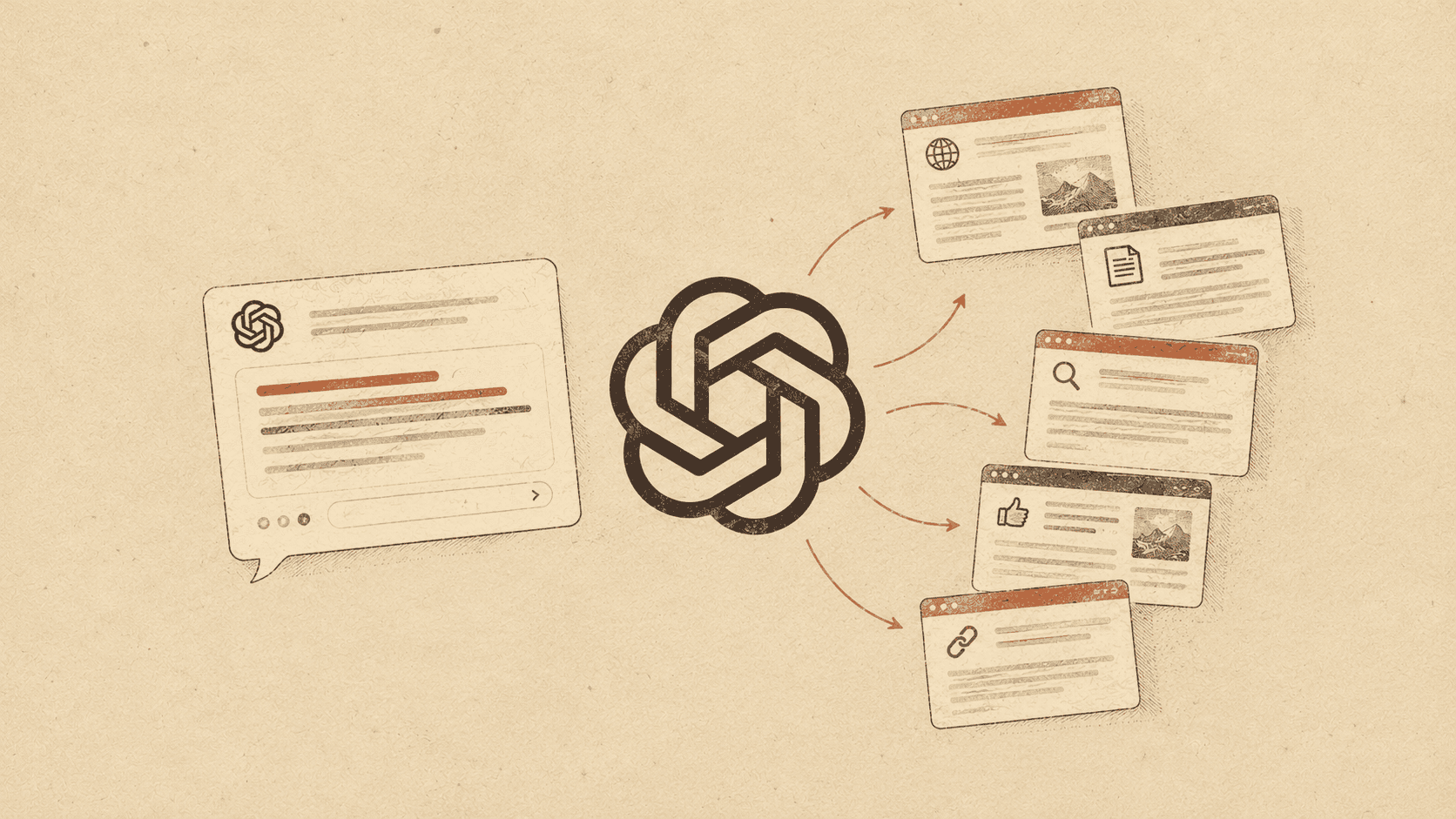
Analyzing the cited sources is one of the most important steps in the whole process. It shows the material AI draws on for your customers’ questions and helps you choose where to make sure your brand is present and described accurately.
Open the specific cited URLs. Tell apart the type of website, such as a store, an industry publication or a forum, and the type of content: a roundup, a review, a guide, a product page or a discussion. The domain alone doesn’t tell you what information the cited page contains.
Check whether it mentions your brand, your product or links to your website. Read the context: is your company recommended, compared with competitors or just mentioned briefly? Note how current the description is, the criteria behind a roundup and what it says about competitors.
Heuriso keeps your brand’s presence in a source separate from its presence in the AI answer. We collect the cited URLs, group them by type and check for mentions on the pages whose content we can fetch. If a page can’t be read, the result stays undetermined. It’s worth judging the context after opening the specific page.
If a roundup that leaves out your products keeps coming back for important prompts, check its criteria and whether your offer fits them. If a cited description is outdated, your first task is to get it corrected. Guides that keep recurring may point to topics worth explaining better on your own website.
Prioritize sources that are cited regularly for business-critical questions. Analyzing them should lead to a list of pages to update, topics to develop and publications where it’s worth checking your brand’s presence.
Build a presence in the sources AI keeps coming back to
The wording of answers, the order of recommendations and the brands mentioned can all change. At the same time, the same cited sources may keep coming back across measurements. Websites that are cited regularly for your customers’ questions should be the priority in your work on brand presence. What matters is both appearing in that material and whether it presents your offer in the context of the reader’s needs.
You need data to confirm that a source really recurs. In an Ahrefs experiment across 34 pages, covering ChatGPT, Gemini, Perplexity and Copilot, citations appeared and disappeared over time even when the pages weren’t changed. That’s an observation from one specific study, and it’s a good reason to check sources regularly. See the Ahrefs study on how stable AI citations are.
Pick a few sources that keep coming back for your most important prompts and note where your competitors appear. Look at specific pages: the same website can be cited many times, but with a different article each time. Then decide what information about your brand could help the readers of that article or roundup.
The type of cited content determines what you do:
- Roundups and comparisons. Check how products were selected and how current the list is. If your offer meets the criteria, prepare specific information for the editors: use cases, specs and how you differ from the compared options. The goal is a fair inclusion of your product, not just getting your name added.
- Reviews and tests. Make it possible to test your product and provide access to documentation. A valuable test shows how the product is used, its strengths and its limitations. If a review covers an older version, tell the author what has actually changed in the current one.
- Guides and industry publications. Contribute knowledge that helps solve the problem being described: a use case, your own data or an expert comment. On your own website, develop content that answers customer questions and link it to the relevant products or services.
- Product pages and supplier directories. Fill in specs, the scope of your offer, use cases and up-to-date company details. Check that the information matches across your own website, resellers and partners. That reduces situations in which different sources describe the same offer differently.
- Forums and communities. Watch for recurring questions and user experiences. If you take part as a representative of the brand, disclose that role and give specific help. These discussions can also reveal problems that need fixing in the product or its description.
After you make changes, go back to monitoring. Record the date of the update or publication, check whether the source is still cited and watch how your brand is presented. Appearing in a source and being recommended in an AI answer are two separate outcomes, and it’s worth tracking both. A source being cited doesn’t guarantee that the company it describes gets recommended.
A plan built this way gives you concrete tasks: update a description with a partner, provide data for a comparison, write a guide or address a customer problem. Every task comes from analyzing the sources cited for questions that matter to your business.
Check your brand’s visibility with Heuriso
Heuriso brings together everything you need for this analysis: choosing prompts, regular monitoring of answers, judging your brand’s presence, comparing it with competitors and analyzing cited sources. That lets you move from “does AI recommend us?” to knowing which customer needs your brand is left out of and where to act.
In your project you can go back to specific answers and review the cited domains and URLs, source categories and your brand’s detected presence on the pages we can read. The history of results helps you see which sources keep returning and whether, after your changes, your company appears more often or is described more accurately.
It’s a shared basis for whoever handles marketing, content and brand communication. You can pick a topic that needs work, point to a publication to check and evaluate the following measurements on the same set of prompts. Heuriso provides the data for these decisions and lets you track the changes in the answers you measure.
Create a Heuriso account, add your brand and start with the questions that matter to your customers. See where your visibility stands today and use the results to plan your next steps.
Want to know whether AI recommends your company? Heuriso measures it daily across five engines.
Try it for 7 days